
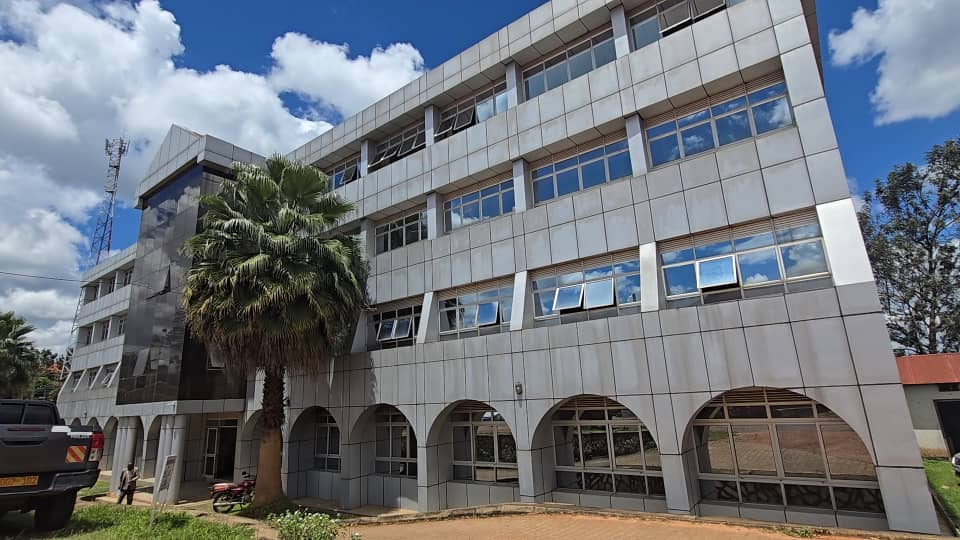
Rukungiri District has entered the final phase of implementing its 2025/2026 financial year development projects, with officials reporting that 95 percent of planned works under a Shs62.4 billion budget have been completed as the district moves into intensive verification, monitoring and commissioning of ongoing infrastructure projects.
District authorities say the full release of development funds from the central government has accelerated execution across key sectors including education, health and road infrastructure, even as challenges in staffing and planning gaps continue to affect full absorption and delivery.
According to the Chief Administrative Officer, Fredrick Byekwaso, engineers are currently certifying completed works while leaders are conducting field visits to monitor and commission projects across the district.
“By the end of May all the projects that we intended to do out of this development budget will be implemented 100 percent,” Byekwaso said.
Most of the ongoing activity is concentrated in the education sector, where construction of new classrooms, renovation of existing structures and sanitation works in schools are being fast-tracked.
The district has also intensified the construction of latrines in several schools as part of efforts to improve learning environments.
In the roads sub-sector, officials say grading and murram road works are being prioritised in the final stretch of the financial year despite limitations in equipment availability.
“We are leveling roads. There are going to be murram roads done in this rush hour before the financial year ends,” said Winfred Nahurira, a district council representative for Kebisoni.
However, district planners acknowledge that implementation has not been without setbacks. Cost variations in some projects have forced adjustments, while others have been scaled down or pushed into the next financial year due to insufficient funding allocations.
“They give us money that is not enough, that’s why some of the projects are carried forward to the next financial year,” said David Kwebangira, the district council chief whip.
Despite the strong overall absorption rate, the district continues to face challenges in budget utilisation, particularly within wage allocations. Officials noted that some salary funds remain unspent and are expected to be returned to the national treasury due to staffing gaps.
A case in point is Bikurungu Seed Secondary School, where completed infrastructure has not yet been matched with deployed teaching staff.
“Development money and all these unconditional funds will be utilized 100 percent. The only money we expect to possibly return is wage. For example, we have built Bikurungu Seed Secondary School, but up to now the Ministry of Education has not sent teachers, yet they sent us wage from July to July,” Byekwaso said.
Looking back at the outgoing term, district leadership highlighted key achievements over the past five years, including the establishment of three seed secondary schools in Kebisoni, Nyakishenyi and Bikurungu, alongside 162 primary schools and 27 secondary schools.
Under the Parish Development Model, the district has also implemented 165 micro-scale irrigation schemes benefiting farmers, an effort officials say has positioned Rukungiri among top-performing districts nationally.
Outgoing District Chairperson Geoffrey Kyomukama, however, noted that service delivery in the health sector remains constrained, largely due to low staffing levels currently estimated at 28.8 percent and the absence of a district referral hospital.
“We have low staffing levels. We are talking to the Ministry of Health to uplift our recruitment so that we are able to supply more manpower to our health units. We also don’t have a general hospital where we can have referrals. We normally go to Mbarara,” Kyomukama said.
Meanwhile, the district has approved a Shs69.1 billion budget for the 2026/2027 financial year, up from Shs62.4 billion in the current year.
Of this, Shs36 billion has been allocated to education and Shs9 billion to health, with the remainder distributed across other sectors.
Rukungiri, which comprises 12 lower local governments, expects to raise Shs1.5 billion in local revenue, leaving about Shs67.54 billion to be financed through central government transfers and donor support.
